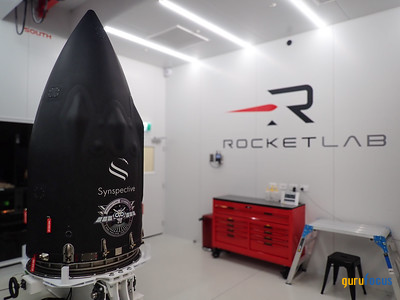
The commercial space sector is abuzz, and at its forefront, Rocket Lab's impressive surge has captured significant investor attention. After a year where its shares demonstrated an astonishing 361% growth, far outpacing broader market indices like the S&P 500 and Nasdaq Composite, many previous skeptics are now forming a strong bullish thesis around the company. This shift in sentiment is largely fueled by Rocket Lab USA's (RKLB) latest financial revelations, which paint a picture of accelerating growth, robust operational performance, and a clear trajectory towards profitability. Their Q2 2024 results were nothing short of a blowout, showcasing record revenue figures and significant advancements in their game-changing Neutron program, positioning Rocket Lab as a formidable player in the burgeoning space economy.
Q2 Financial Blowout: Rocket Lab's Stellar Performance
Rocket Lab kicked off the second half of the year with a bang, reporting record financial results that sent its stock soaring in pre-market trading. The company announced a remarkable $144.5 million in revenue for Q2, marking a substantial 36% year-over-year increase and comfortably exceeding its prior guidance. This robust performance is a testament to the increasing demand for its Electron launch vehicle and its diverse portfolio of space systems.
CEO Peter Beck highlighted the quarter's operational successes, noting five successful Electron missions. These launches included critical contracts with esteemed clients like NASA and the European Space Agency, underscoring Rocket Lab's reliability and its pivotal role in both governmental and commercial space endeavors. Such high-profile partnerships not only secure revenue but also build credibility and expand the company's influence across the global space ecosystem. For investors, these consistent mission successes are a strong indicator of operational excellence and a reliable revenue stream.
Beyond the top-line growth, Rocket Lab's financial health showed significant improvement on the profitability front. CFO Adam Spice reported a GAAP gross margin of 32.1%, comfortably beating analyst estimates. This improvement points to enhanced operational efficiency and better cost management as the company scales. Looking ahead, the company has lifted its Q3 revenue guidance to between $145 million and $155 million, with forecasted gross margins expected to climb further, potentially hitting up to 37%. These projections signal strong momentum and a clear path towards sustainable financial performance, reinforcing the narrative of a Rocket Lab soaring into a more mature financial standing.
Fueling the Future: The Neutron Program and Launch Infrastructure
While the Electron continues to perform exceptionally, much of the excitement and long-term bullish outlook for Rocket Lab stems from the rapid advancement of its Neutron program. Designed as a medium-lift, reusable rocket, Neutron is poised to significantly expand Rocket Lab's launch capabilities and market reach, directly challenging competitors in the heavier payload segment.
Peter Beck emphasized the accelerating momentum in the Neutron program, providing tangible updates that reassure investors of its progress. Specifically, he noted that Launch Complex 3 (LC-3) at Wallops Island, Virginia, is nearing operational status. This dedicated launch site is crucial for Neutron's future missions, providing the necessary infrastructure for rapid launch cadence. Furthermore, crucial components and parts for the Neutron rocket are reportedly en route to Virginia, indicating that assembly and integration are well underway. This meticulous progress from design to manufacturing and infrastructure development highlights Rocket Lab's strategic foresight and execution prowess.
The Neutron program is not merely about launching bigger satellites; it represents a significant leap in Rocket Lab's vertical integration strategy. By developing a reusable medium-lift launch vehicle, the company aims to reduce launch costs, increase frequency, and capture a larger share of the booming satellite deployment market. Its reusability feature also places it in direct competition with industry giants, offering a more sustainable and cost-effective solution for deploying mega-constellations and heavier payloads. This forward-looking investment in infrastructure and next-generation technology is a key driver for Rocket Lab's projected long-term growth and market dominance.
The Path to Profitability and Beyond: What Analysts See
A crucial factor in the shifting investor sentiment towards Rocket Lab is its clear and articulated path to profitability. For many high-growth technology companies, especially in capital-intensive sectors like space, achieving consistent profitability is a significant milestone that validates their business model and operational efficiency.
Analysts are increasingly bullish on Rocket Lab's financial trajectory. Projections indicate that the company is expected to generate just shy of $1 billion in revenue by 2027. More importantly, these forecasts also predict that Rocket Lab will reach profitability for the first time in the same year. To put this into perspective, this projected revenue figure would be more than double what Rocket Lab is expected to generate for the full year in 2024. This aggressive growth forecast is underpinned by a combination of factors: continued demand for Electron launches, the anticipated operationalization and scaling of the Neutron program, and the expansion of its high-margin Space Systems division, which provides satellite components and spacecraft manufacturing services.
Achieving profitability will not only stabilize Rocket Lab's financial position but also make it a more attractive investment for a wider range of institutional and retail investors. It signals that the company can generate sufficient cash flow from its operations to fund future growth without relying solely on external capital. This financial independence is critical for long-term sustainability and allows for greater strategic flexibility in a highly competitive and evolving industry. The increasing gross margins forecasted for Q3 and beyond further solidify this positive outlook, demonstrating improved efficiency as the company scales its operations.
RKLB vs. SpaceX: A Valuation Perspective for Investors
When discussing investments in the space economy, Elon Musk's SpaceX often dominates the conversation. However, for public market investors, Rocket Lab offers a compelling and more accessible alternative. SpaceX, currently valued around $350 billion following a recent secondary sale, presents a unique challenge for those hoping for significant appreciation purely based on market cap growth. Doubling that valuation to $700 billion, or even aiming for a 10x return to $3.5 trillion, would require a company value far exceeding the estimated total addressable market (TAM) for the entire space economy, which is projected to reach $1.8 trillion by the middle of the next decade. This mathematical reality makes the prospect of outsized returns from SpaceX, purely through valuation expansion, a tough ask in the near to mid-term.
In contrast, Rocket Lab's current market capitalization hovers around $12.4 billion. While this might seem "rich" when considering its current sales figures and lack of profitability, the long-term growth potential against the backdrop of the space TAM makes it a fascinating proposition. Analysts forecasting nearly $1 billion in revenue by 2027 and the onset of profitability suggest a trajectory that could significantly expand Rocket Lab's valuation multiple over the coming years. For investors seeking substantial returns in the burgeoning space sector, the lower entry valuation of RKLB compared to SpaceX offers a greater runway for growth. This is a critical distinction for those evaluating long-term investment strategies in the space industry. For a deeper dive into this comparison, you can read more at RKLB vs. SpaceX: Unpacking Rocket Lab's $12.4B Valuation Advantage.
Navigating the Space Investment Landscape: Tips for Investors
Investing in dynamic, high-growth sectors like space requires a thoughtful approach, as my grandfather wisely advised: invest in what you truly understand. While space tech might seem complex, understanding the core drivers and the long-term vision of companies like Rocket Lab is key.
- Focus on Fundamentals: Look beyond the hype. Rocket Lab's Q2 results, strong margin improvement, and clear profitability roadmap are concrete fundamentals that support its growth narrative. Consistent revenue growth, expanding gross margins, and strategic program advancements (like Neutron) are vital metrics to track.
- Long-Term Vision: The space economy is in its early stages of exponential growth. Investments here are typically long-term plays. Rocket Lab's 2027 profitability target signifies a multi-year horizon for investors. Patience is paramount.
- Evaluate Management and Execution: Peter Beck's leadership and Rocket Lab's track record of successful Electron missions and consistent progress on Neutron demonstrate strong execution capabilities, which are crucial for navigating the complexities of the space industry.
- Understand the Competitive Landscape: While Rocket Lab holds a unique position, it operates in a competitive market. Understanding its differentiators – from its Electron small-sat launches to its upcoming Neutron medium-lift capabilities and integrated space systems offerings – provides a clearer picture of its market advantage.
- Risk vs. Reward: Growth stocks in emerging sectors can be volatile. While the potential for a Rocket Lab soaring further is high, investors should be prepared for market fluctuations and align their investment with their personal risk tolerance.
Conclusion
Rocket Lab's Q2 performance is a resounding affirmation of its strategic direction and operational efficiency. With record revenue, improving margins, and significant strides in the Neutron program, the company is firmly on track to achieve profitability by 2027, solidifying its position as a dominant force in the rapidly expanding space economy. The compelling valuation argument against its larger, privately held peers, combined with a clear growth trajectory, makes Rocket Lab an increasingly attractive proposition for investors looking to capitalize on the next frontier of human endeavor. As the commercial space industry continues its exponential expansion, Rocket Lab stands out as a company not just launching rockets, but launching itself into a new era of growth and financial success.